Why the US naval blockade against Iran will fail
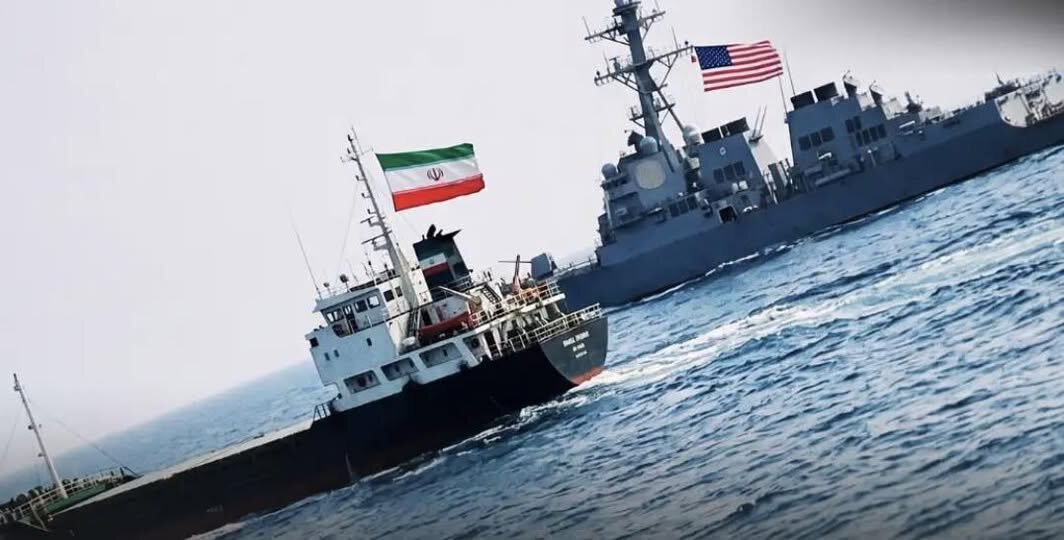
MADRID - When Washington announced the start of operations to intercept vessels carrying Iranian oil, markets barely moved. That lack of alarm was not a sign of indifference, nor simply the result of traders grown accustomed to crisis; it was, rather, an indication of how thin the gap has become between Washington’s language of blockade and the material reality of the Persian Gulf.
The announcement was framed as an assertion of strength, as though a declaration of interdiction could itself bend shipping routes to American will. What followed was something less theatrical and more revealing: a demonstration, not easy to absorb in Washington, of the structural limits of American power in a region where geography does not obey sanctions and where the political economy of oil has long since learned how to move around pressure.
That failure begins before the first patrol is launched. In the weeks before the operation, a substantial share of Iranian crude had already been moved from vulnerable terminals and dispersed into routes beyond the immediate reach of interception. Some cargoes were transferred to tankers waiting in less exposed waters; others were folded into a maritime architecture of flags, registries and intermediaries that makes ownership difficult to pin down and enforcement costly to sustain. This was not panic. It was anticipation. Tehran had read the situation correctly: the real contest was not over a single port or a single shipment, but over the infrastructure of circulation that links one terminal to another, one legal regime to another, one market to another. By the time Washington acted, the places it meant to pressure had already been partially emptied, and the blockade found itself confronting a geography that had moved on.
The issue is not just Iranian strategy, as though Tehran had simply devised a clever way to evade pressure, but Washington’s persistent refusal to recognize that coercion in the Persian Gulf has already altered the strategic field in Iran’s favor. The more the United States tries to impose a maritime order by force, the more it confirms the central fact on which Iranian policy has long relied: that American power in the region is real, but not sovereign, and that its limits are visible wherever the political costs of escalation begin to outweigh the theatrical value of command. The Strait of Hormuz is not a passage that can be sealed in the abstract. It is a narrow and indispensable corridor through which a large share of the world’s energy trade moves precisely because there is no easy substitute at the required scale. To speak of a “selective” closure is already to expose the fantasy. One cannot block Iranian oil alone without touching the traffic of other producers and buyers, or without disturbing the shipping, insurance and trans-shipment arrangements that allow the market to function. The Persian Gulf is not a blank military theatre. It is a crowded commercial space in which every attempt at coercion produces knock-on effects that spread far beyond the intended target.
China grasped that immediately. It did not need to issue grand statements about sovereignty or world order. It simply continued its energy purchases and made it clear, through diplomatic and commercial channels, that interference with those flows would be regarded as hostile. The restraint of Chinese language should not disguise the substance of the issue. For Beijing, energy security is not a peripheral concern but part of the political architecture of the state. It cannot afford to appear as though it is submitting to an American attempt to police a route on which a significant part of Asian growth depends. For Washington to stop Iranian oil at scale would therefore require something much larger than naval capability. It would require the willingness to confront China over a chokepoint that sustains not just Iran’s exports but the wider circulation of Asian energy. That is a risk no American administration wants to run, however loudly it may speak of pressure.
This is why the operation, once announced, rapidly contracted into something narrower and more ambiguous. Even that diluted version ran into the same obstacle: the ports are no longer the fixed and legible targets that blockade rhetoric presumes. Iranian shipping has long since become a dispersed system of detours. Cargoes are hidden in plain sight and moved in forms that make ownership hard to trace. Some of the oil is simply waiting at sea, officially in search of a buyer, practically serving as floating storage outside immediate jurisdiction. Each time the Americans identify one point of pressure, the system shifts elsewhere. What looks like evasion is, in fact, the ordinary logic of a maritime order built to manage risk by dispersing it.
The real question, then, is whether the United States is prepared to push this logic to the point where it collides with its own interests. In strictly technical terms, an American warship can stop a tanker. But political power is not the same as technical capacity. To enforce a blockade against Iranian oil at scale would mean confronting cargoes tied to Chinese and wider Asian trade, and that would mean turning a sanctions operation into something far more volatile: a confrontation with the commercial arteries of the wider region. The South China Sea, Malacca, Malaysian and Singaporean waters, insurance chains, port authorities, trans-shipment hubs: all of that would become implicated. There is no clean way to do this. The blockade does not produce control; it produces friction, and in a highly interdependent system friction becomes crisis very quickly.
Iran’s position is not measured by conventional warfighting alone. In the Strait of Hormuz, it has already secured the more important victory: it has made American force contingent, costly, and politically self-defeating. Tehran has spent years building precisely this kind of deterrent: anti-ship missiles, mines, fast attack craft, drones, the political readiness to use them, and a strategic understanding of the geography in which they operate. None of this needs to be spectacular. The Strait is shallow in places, congested, and bordered by coastlines that favor concealment and surprise. In such an environment, even modest capabilities can have disproportionate effects. The point is not that Iran can destroy the US Navy. The point is that it can raise the cost of passage enough to make the blockade self-defeating.
That is what gives Hormuz its political force. It is not simply a waterway but a bargaining instrument, a place where geography can still interrupt power. Iran has understood this for a long time. During the war with Iraq, tankers were attacked in the Persian Gulf. More recently, vessels have been seized or harassed, and energy infrastructure in the region has been struck in ways that make the same basic point: the Persian Gulf is not a neutral channel that can be policed from outside without consequences. Washington tends to read such acts as isolated provocations. They are not. Their significance lies in the pattern they establish. Tehran has spent decades demonstrating that the Strait is not a placid line on a map but a space in which coercion can be returned.
That is also why the American operation contains a contradiction from the beginning. Washington wants to use Hormuz as leverage against Iran, but in doing so it reminds everyone that the leverage can move in both directions. If pressure rises, Tehran can respond by raising the cost of the passage itself. If ships are delayed, inspected or seized, premiums rise, routes are diverted, and the Persian Gulf becomes less a corridor than a zone of uncertainty. The United States can announce a blockade, but it cannot easily manage the chain reaction that follows. In this sense the blockade is not a solution to Iranian power but an acknowledgement of it. The more Washington tries to make the Strait into an instrument of discipline, the more it reveals that it is already an instrument of Iranian leverage.
The wider consequences are predictable. Persian Gulf states that depend on the stability of shipping do not want a prolonged confrontation. Asian importers cannot afford a sustained interruption. European governments, already exposed to volatility in energy markets, know that disruption in Hormuz would not stay in the Persian Gulf. Yet Washington’s policy seems built on the assumption that pressure can be localized, that one can isolate Iran without touching the wider commercial order. That assumption no longer holds. In a system of shipping, finance and insurance this dense, a disruption at one point spreads through the whole network. The blockade therefore does not simply target Iran; it reorganizes risk on a global scale.
This is the point at which the political meaning of the operation becomes clearest. It is meant to signal control, but it mostly reveals dependence. The United States still has some power, of course, but not in the old imperial sense in which force could be exercised with relative impunity. In Hormuz it operates inside a structure it does not fully command. It can monitor, deter, inspect and threaten, but it cannot cleanly separate Iran from the rest of the maritime world without inflicting damage on that world as well. The blockade is therefore less a technique of closure than an attempt to demonstrate authority over a system whose internal contradictions are already visible.
American policy often assumes that an alleged superior force will eventually produce compliance if pressure is sustained long enough. But pressure works only when the target lacks alternatives. Iran does have alternatives: storage networks, diversion routes, regional alignments, and above all the ability to turn Hormuz into a problem that no outside power can simply solve by command. The blockade may slow certain exports and complicate some transactions. It cannot break the larger system that makes Iranian oil so difficult to isolate.
So the failure is structural before it is tactical. The United States is trying to assert control over a chokepoint embedded in a world economy too dense and too politically entangled to be governed by force alone. That is why the operation can be announced, revised, narrated and extended, but not cleanly completed. The market understood this at once. Not because it believes the Persian Gulf is stable, but because it recognizes the difference between interruption and closure, between a performance of control and control itself.
What remains, then, is a familiar American compromise: a policy that wants to look hard without paying the full cost of hardness. It may still disrupt shipping, raise insurance costs. But it cannot do what it claims to do. It cannot close Hormuz without opening a wider crisis, and it cannot pressure Iran without exposing the fragility of the system through which that pressure must pass. The mirage lies not in the naval assets or the legal language, but in the belief that the world can be commanded once geography, commerce and political will have already arranged otherwise.
Leave a Comment